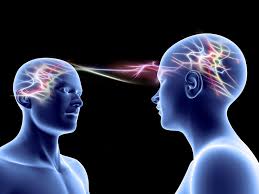
Philosophy and telepathy: an open discussion
Is telepathy possible? What professional philosophers think.


Some musing on various related issues …

Latest from the Blog
How to Nobble Physicists Using Unfair Tactics
I have never been fond of name dropping, but like Neil Innes, I am prepared to suffer a lot for my music. Now it’s your turn … However, Martin Rees, astronomer royal, Master of Trinity College, Cambridge, and all-round respectable clever clogs is on record as saying that there is almost certainly intelligent life elsewhere…
15th Jun 2024
_Fons et origo_: on Freedom and Originality
The phrase ‘fons et origo’ is Latin for ‘source and origin’. It is in this context that we say that Ancient Athens is the fons et origo of democracy, for example. The word ‘fons’ also has the more literal meaning of ‘spring’ or ‘fountain’, and so the source of the River Thames (near Cirencester in…
6th Apr 2021
Divine Hoorays: or ‘The Will to Power’ revisited
Now, I have a reputation for being able to teach most areas of philosophy. There are exceptions, of course, such as strange, continental-flavoured modules like ‘Feminist Philosophy’ and ‘Marxism’, but that is broadly correct. An odd mixed sort of module is ‘Philosophy of Religion’. Now, as everyone knows, analytical philosophers do not do silly obscure…
25th Mar 2021
Get new content delivered directly to your inbox.
Enter your email address
Sign Up
Philosophy and telepathy: an open discussion, Blog at WordPress.com.
Philosophy and telepathy: an open discussion
Is telepathy possible? What professional philosophers think.
_Fons et origo_: on Freedom and Originality
The phrase ‘fons et origo‘ is Latin for ‘source and origin’. It is in this context that we say that Ancient Athens is the fons et origo of democracy, for example. The word ‘fons‘ also has the more literal meaning of ‘spring’ or ‘fountain’, and so the source of the River Thames (near Cirencester in Gloucestershire) might also be described as its fons et origo.
In the philosophy of action, what makes an action free (according to some theories) is that its fons et origo is a human agent, not a series of events stretching back through time. And we can ask, of interesting ideas, just where they came from, and just who gets the credit for originality, i.e., for being the first to introduce them into our mental space. So, in my disorderly sense, fontes et origines are all over the place. Do they have anything interesting in common?
Well, yes, quite a lot, actually.
Firstly, they are mysterious. In the Ancient World, they were not much concerned with the origins of Western civilisation, but they were deeply puzzled by the source of the Nile.

Rivers should have beginnings as well as ends, and while it is true that the longest river in the world has a delta rather than a massive outflow such as you get with the Amazon, you would expect less chaos upstream.
Only, of course, you don’t. Every river has tributaries, and its structure tends to be that of what mathematicians call a tree (ignoring the roots).

That is to say, you have a single node or vertex where the tree meets the ground and metaphorically starts, and then divisions (tributaries) as you go upwards until you reach the ends of the upper twigs which are many and thin. Branches do not rejoin each other, unless you allow for a hole in the tree itself , and it is interesting to ask why this should be so.
Equally interesting is the question of why a range of mountains or hills does not arrange itself so as to allow for streams and rivers to divide as you move downstream. After all, it is the shape of the river-bed that determines the shape of the water-flow, not the other way round – unless, of course, you operate in geological time.
The following little musical number operates in a brisk 4/4 time, by contrast.
The source of the Nile is still undetermined, but we have greater agreement over that of the Thames. Even here, however, there is some dispute, and since the river has many tributaries, we might wonder again why any of their sources are not considered to be the Thames’s true fons et origo.
Sometimes, the answer is obvious, if (for example) the tributary in question is very short or has only a small volume of water flowing through it. Thus, the sources of the London tributaries, such as the Westbourne (which flows through the Serpentine lake in Hyde Park), would not count as a candidate for the title of Thames Head, even though the ponds at Hampstead and Highgate are of considerable geographical interest (they source the River Fleet, as well).
Sometimes, the answer is less obvious, if the tributary is the River Cherwell which meets the Thames at Oxford. Being a posh sort of place, the first ‘e’ is pronounced as if it were an ‘a’ (one thus says ‘Chahwell’ – as in ‘Okay, yah!’).

Incidentally, Oxonians (i.e., inhabitants of Oxford) avoid the problem of whether their main river should be called the ‘Thames’ or the ‘Cherwell’ by instead calling it the ‘Isis’, and thereby pleasing nobody.
So much for rivers. But mathematical trees have many sorts of application, and when we search for the ultimate cause of some phenomenon, we get a variety of interesting shapes and structures. And when the phenomenon is something that someone holds you responsible for (yes, you!), we get a problem about human autonomy, and the classic philosophical problem of the freedom of the will. Let me explain.
In another post, I explained that causal responsibility and moral responsibility are different. An avalanche may be causally responsible for the destruction of a village in the valley below, but has no moral responsibility for that or for anything else. It is not an agent, in the relevant sense.
By contrast, the person who triggered the avalanche (or who failed to prevent the avalanche from happening, or who failed to warn the villagers of the impending danger), is morally responsible, even though it was the heavy snowfall that was the prime causal mover. This person is an agent, in the relevant sense, and is responsible for her actions and/or inactions.
So, the $64,000 question is: what is this relevant sense?

Now, there are several related points here, and they are all connected directly, or indirectly, to the problem of what it is for one thing to cause another.
It may seem that if I am to blame for the smashing of an expensive bottle of wine, for example, then something to do with me must cause the smash. This needs to be qualified, of course. If, through misadventure, the bottle starts to roll down an inclined plane and drops off the edge and lands some feet below on a concrete floor, I can be blamed if I fail to intervene and merely watch nonchalantly with all the relaxed fervour of a committed teetotaller seeing the Devil’s Work come to an untimely end.
The point is that if I had done differently, then the bottle would have been saved. But what could I have done instead? This is where matters become interesting.
Traditionally, free will is contrasted with determinism which, you may recall, is the view that there is no genuine randomness in the world. Given the state of the system at an earlier stage (and assuming no interventions from the outside), only one outcome is possible. If you had two exactly similar systems which yielded different outcomes, then you would expect some relevant further difference that would explain the difference: in which case, they would not be exactly similar systems in the first place.
Talk of ‘systems’ is a bit abstract (even if it can be made mathematically precise), so let me give a more informal example. Thus, suppose you are running late for work and climb into your car hoping that the traffic will not be too heavy on the motorway, what do you find? You find that your car will not start, that is what. Of course.
You naturally want to know why, if only so that you might be able to fix the problem. So you run through the possibilities. No petrol? Flat battery? Somebody cut the wires connecting the starter motor to everything else? And so on. But no-o-o! There is nothing untoward to be found.
Do you just say that it must be one of those things, and consider public transport instead? Well, probably, but you might also have your intellectual curiosity stimulated just a little, and wonder what can possibly have gone wrong. What, on earth, causes the car not to start?
So you take it to a good garage mechanic – who, of course, fixes the problem. Only – since I am a philosopher, and it is my example – he does not. He has to say instead that, in forty years of experience of fixing cars, he has never come across anything like this before. He retires, a broken man.
So you take the car to your friendly local physicist with her gleaming laboratory full of the latest electron microscopes and so forth. She scans all the elementary particles as best as she can, and finds, to her chagrin, that everything seems to be in place, except that some muons and gluons near the starter motor seem to swerve in a way that offends the laws of physics. (Incidentally, the notion of an atomic swerve, which was designed to accommodate free will, was known to the Ancients as a clinamen.)
Now in tears, she informs you that there is no natural explanation for your car’s non-performance. She recommends an exorcism.
Well, the local clergy do their best, but – alas – no results. So, what’s to do?
Now, a traditional staple entertainment of the British seaside is the Punch and Judy show, a celebration by glove-puppets of wife-beating and baby-battering much adored by generations of young children and their parents. The iniquitous Mr Punch manages to thrown down stairs all the forces of law and order that are sent against him, until the very last. Who is that, I hear you ask, nervously? The philosopher? Well, no, it is actually by tradition a crocodile, but as far as your car is concerned, it is indeed the philosopher.
And what the philosopher has to say is: you have been missing the point. There is no explanation, either natural or supernatural, for your car’s not starting. This non-event just does not have a cause at all. The innards of your vehicle simply do not form a deterministic system.
Now, the normal view, I think, is that this denouement is utterly absurd. We would ordinarily prefer a supernatural explanation – a ghostly intervention – rather than no explanation at all. Yet why?
The physicist might recover slightly and point out that there might always be some sort of quantum funny business (QM) going on – and that QM is famously indeterministic. However, she needs to be cautious here. Schrödinger’s wave equation evolves deterministically, and the influential no-collapse interpretations of QM say that determinism still rules supreme.
Moreover, the traditional principle of sufficient reason still seems to be obviously right, even if it is unclear how it is to be proved in a non-circular way.
How does all this affect the freedom of the will? The point is this. If you do something reprehensible, such as punch your neighbour on the nose, we typically say that, unlike the avalanche, you did not have to do what you did. Your arm’s movement was not the result of an involuntary muscular spasm, for example.
But … if the particles that compose your arm were all predetermined to move in the trajectories that they did, it seems as though your arm’s movement was necessitated after all. You could not have done otherwise.
Now, compatibilists (as they are called in the trade) say that this is to misunderstand what is actually meant by freedom. A free action is not an uncaused, random action, but one which is caused in a particular sort of way. Specifically, it is caused by your decision to act as you did, which in turn has to emanate from your inner personality, and not be undermined by any sinister unwilled elements.
This does indeed correspond to the commonsensical contrast between forced and unforced behaviour, but the problem remains that, since the fact that you have the personality you have is caused by things which are in turn caused by other things – and so on back to the Big Bang – it must follow that you are in no way responsible for what you do in reality. Such is determinism. The really big trouble-making principle is this:
++If X is necessitated by Y, and you are not responsible for Y, then you cannot be responsible for X either. ++
Or so it would seem. You are not the fons et origo of X, even if you caused it to happen (and willingly so).
And yet … you can alter your personality up to a point, and you can be blamed if you do not do so. But it is still puzzling as to how this can be. I suppose the idea is that, deep down in us all, there is something good that often has to fight its way past a surrounding package of bad elements to produce good results. Some of us are fortunate and have relatively few bad elements and a relatively strong inner core.
But what of the unfortunate ones – and the word ‘fortune’ which appears in the phrase ‘good fortune’ suggests good luck, does it not? Can they be blamed for being unlucky? Hmm.
We tend to think that Hitler’s personality was rotten to the core, and that there were no redeeming features to be found – no matter how far down we search. Yet if that is so, we reach the very odd conclusion that he cannot be blamed for his behaviour. This is plainly not what we think. And it is not because we think that a rotten-to-the-core personality is a kind of mental illness in the sense of the M’Naghten rules. Hitler probably knew exactly what he was doing. That is why we condemn him. And that is also exactly why we cannot condemn him – because he cannot be blamed, as we just noted. A paradox, indeed.
Hitler is not your stereotypical villain, since he is generally perceived to be the ultimate human monster. So, it is advisable to aim our sights a little lower, and fictional characters have the virtue of being perfectly knowable. So here is one famous baddy from medical fiction:
I am referring, of course, to that very scary individual, Nurse Ratched, not the Jack Nicholson character.
Nurse Ratched is portrayed in the film as the fons et origo of all that is wicked that goes on at the mental hospital where she works. This, of course, includes herself. Yet does she not have an immortal soul and a possibility of redemption like the rest of us, the more religious of us might ask hopefully?
Well, one person who might think in that sort of way was the pietist philosopher, Immanuel Kant, whose views on free will are bizarre and yet (in a way) compelling. He thought that the physical world in space and time (which include our brains and bodies, of course) was rigidly deterministic, and that compatibilism was a ‘miserable subterfuge’.
It obviously follows that free will is an illusion, you naturally conclude – but oh no. The (unknowable) self-as-it-is-itself is outside the realms of space, time and causality – and is perfectly free. It is only the more down-to-earth self-as-it-appears-to-itself that is determined.
Well, obviously. Now, why didn’t we think of that earlier?
Anyway, while you are mulling that over in your mind, here is a short and somewhat neglected song by an underrated band:
We naturally complain that Kant’s philosophy is riddled with inconsistencies. But Kant knew that perfectly well. The inconsistencies, which are articulated within an important chapter of the Critique of Pure Reason called the Antinomy of Pure Reason, are fundamental to Kant’s philosophy. Each antinomy (there are four of them) has a thesis and an antithesis which are arguments that seem perfectly sound but which have opposite conclusions. The third antinomy (that we have both free will and predetermined actions) is the relevant one here.
Does that mean that the world is a self-contradictory place, and that we should all be dialetheists? Well no, because the world itself divides into two realms, the phenomena (world of appearances) and the noumena (world of things in themselves), with determinism applying to the former and free will existing in the latter. This duality saves us from a formal contradiction.
The duality comes at a price, however, for we naturally want to know how the phenomenal and the noumenal are related if they are not really one and the same realm (though described in different ways).
The doctrine that we have no knowledge of things as they really are in themselves, and that we only know of things as they appear to us, is called transcendental idealism. It goes with the view that the known world is somehow made by the knowing mind, which in turn comes from the fact that the raw data from outside has to be processed by internal elements (the schematized categories) before we get intelligible beliefs. (If that is right, then we would get a different known world if our schematized categories had been different, even if the noumena and the raw data therefrom had been the same.
This may sound a bit weird, but it is a familiar idea. We are all told that the world is some sort of cultural construction, and people from different cultures do not merely have different world-views: they actually live in different worlds altogether. The very idea of an objective reality is thought to be some kind of myth, and the demand that our particular world-view be deemed to be objectively valid is treated as imperialistic. The term postmodernism is sometimes used nowadays, but the basic idea has its origin in Kant.
Anyway, there is a lot to discuss here, but what about the notion of free will, the idea that the noumenal self – the self-as-it-is-in-itself – is the fons et origo of our actions as they propagate through space and time?
It may still sound odd, but it is very natural to treat one’s actions as interventions in the natural order, as opposed to items within it. The world is depicted as being ‘down there’ on a flat plane (perhaps), whereas we survey it from above and intervene at will. We – the real we – are not part of this world, but act on it from outside. And there is nothing behind us that could steal away our autonomy .
We can see that this view is obviously wrong when we put it as bluntly as this; but it is a natural and very tempting illusion, nonetheless.
We get a similar idea when we try to explain how we can have knowledge of the external world. We are thought to survey reality form an external vantage point, one which is uncontaminated by any conditioning that might undermine an objective assessment of the evidence. (As I mentioned in my ur-article, knowledge and action are related inasmuch as the former concerns world-to-mind connections, and the latter mind-on-world connections.)
This ‘Olympian standpoint’, or ‘God’s eye point of view’, or ‘neutral perspective’ leads to all manner of philosophical difficulties. Such is the desire to see things sub specie aeternitatis.
What all these difficulties have in common is the question of how to set a boundary between the self and what is not the self. The problem is that there is always the temptation to drive the self ever further inwards, and to treat what is left as being – not part of the self – but, rather, something that the self has to get to work on.
We have seen this when we considered the inner core of the personality as against the external aspects that need to be modified to as to overcome human frailty. The trouble with Hitler, we decided, was that the good inner core was vanishingly small, and that he was pure sinfulness all the way down. Perhaps this is unduly pessimistic.
Another parallel point concerns what we might call the vanishing observer, namely the problem of locating the interface between the observer and the observed. This is a major issue in the interpretation of quantum mechanics, but it is problematic even within a classical framework.
Thus, suppose I observe a complex molecule through an electron microscope. What do I actually see? Actually, a peculiar image on a computer screen, so this suggests that the electron microscope is really part of the observed system, and not just an extension of myself.
So far, so good, but we are on a slippery slope. What about an ordinary microscope? Or my spectacles? Or, indeed, the eye-lens itself. (Perhaps my self ends at the retina, and I see an upside-down world through the transparent jelly that forms the interior of the eyeball.)
We can trace things even further back into the visual system, of course, down the optic nerves, through the optic chiasma, and thence through the optic tracts into the heart of the brain. Just where does input cease to be input and turn into internal processing? Clearly, there is no straightforward answer. Of course, we can be rigidly Cartesian, and suppose that absolutely all of the cerebral processes are part of the observed system, and that it is only the immaterial processes downstream of the pineal gland that form the pure observer, but that is a bit too austere – even though we can see why we might be tempted into thinking that this is what we ought to do.
At an more abstract level, we can treat our overall background theory – with its local cultural assumptions – as part of what is to be known, or as part of the knower. It ought not to make much of a difference as to where we draw the line, since the intellectual processes that are divided up remain the same however we do it.
All this is rather abstruse stuff, and it is still unclear why a human agent should be regarded as a fons et origo. Perhaps it is us, the judges, who need to be examined more carefully.
What are we doing when we blame a person for her actions? To cut a long story short, we are expressing a certain sort of resentment that we feel. Resentment, along with its more positive counterpart, gratitude, are examples of what P.F. Strawson calls reactive attitudes.
Are we ever justified in resenting a person? It might seem that the difficulties we have reached in giving a coherent account of free will show that the answer is ‘no’. Resentment is never justified, since nobody is ever genuinely responsible for what they do. Neither, for that matter, is gratitude ever justified. They (the reactive attitudes) belong to a superstitious past, and should be superseded by … what, exactly?
Well, what indeed. Anyway, Strawson’s own view is that we should not abandon these reactive attitudes. They form an essential part of what it is to be human. We can see his point, but ask how a person can keep on resenting Hitler or Nurse Ratched (or whomever), and still remain philosophically aware.
Strawson is a mainstream analytical philosopher who had little time for what we call continental philosophy, but there is an interesting parallel between his thought and that of thinkers such as Scheler and Nietzsche. The central concept that needs to be explored here is called ressentiment, which is not quite the same as resentment, but is closely related to it.
A rather naive definition of ressentiment is that it is that toxic combination of envy and malice that low-grade human beings typically feel about their superiors. A genuinely strong person is above such pettiness – indeed, might well be strong precisely because she managed to put such pettiness behind her – but, like Gulliver, could nevertheless be brought down and humiliated by large numbers of Lilliputian nonentities.
Nietzsche compares two conceptions of morality: a Master morality centred around the opposition of good and bad, which he associates with the Romans; and a Slave morality centred around the opposition of good and evil, which he associates with the Jews. Trying to evaluate differing evaluative systems is not easy, for which system should one use in the evaluation itself? Anglos have worried about this, as well as the continentals.
He also asks, famously, whether the reaction ‘This is evil’ is not really just camouflage for ‘I am not up to it’, and suggests that only a weakling would stoop to such things. Occasional references to the ‘glorious blond beast’ have not endeared him to post-war Anglo-Saxon commentators either, though it seems that Nietzsche was referring to lions, not Germans, here.
It is a matter of historical record that Nietzsche hated anti-semitism, and he was famously rumoured to have intervened recklessly when he saw someone repeatedly whip his horse in the street.
Still, you can see why the Nazis could appropriate him for their own ends, and the thought of a smirking SS officer, who has just casually murdered your family, saying to you that your helpless rage is just an admission that you are ‘not up to it’ is not one that is easily viewed with analytical coolness.
At the heart of Nietzsche’s ethics lies the notion of the Übermensch, sometimes translated as ‘the superman’, but better (I think) as ‘the beyond-human’. The idea has been viewed with great suspicion since 1945 for obvious reasons, but it need not be sinister. Humanity is not exactly wonderful at present, and the idea behind ethics is to find ways of improving ourselves.
On that note, here is a weird musical number from 1981:
https://www.youtube.com/embed/zn7QCUOtrHM?feature=oembedImagine having to sing ‘Ha!’ over a thousand times …
So, to cut a long story short, we need to become more responsible, to recognize that not only ourselves but other people have responsibilities – and to develop a more sophisticated kind of resentment/ressentiment when we react to others’ failures in this respect. This means engineering our traditional conception of free will in a positive direction. How do we do that?
Here is some musing that might help.
Must a beyond-human always be a leader, not a follower? It might be difficult for such individuals to form a society if that were so, and to follow is not always to follow slavishly. Nor need a leader be free from human weakness: indeed, it can happen that the person in charge dare not relinquish her position lest her personality collapse, hardly a sign of inner strength.
Still, it is possible for a beyond-follower to be more than just a cog in a machine, or to be entirely replaceable by someone else. Essential to the notion of causation is the idea of making-a-difference, as is formalized by Mill’s methods, for example.
The idea can be misused. Thus, the CEO of a cruel but profitable company might claim that, without her, the organization would collapse, and that she therefore makes a massive difference – something that can used to justify to shareholders her exorbitant salary. The humble employee, by contrast, can easily be replaced, and consequently can be argued to make virtually no difference at all, a matter that can be raised at her annual performance and salary review. However, I shall be talking more about economics in another post, so shall leave the matter there – for the moment. You can see its philosophical relevance, anyway …
So, how can you guarantee irreplaceability? One way is by having a kind of job that involves creativity. Kant, for example, was highly influential, and had he died in infancy, the course of human history would probably have been slightly different. Our intellectual history would surely be different. It is interesting to ask exactly why, especially if you adhere to certain versions of the doctrine of historical inevitability.
Of course, it could be argued that things would have been a lot better off without him, so his employers need not be unduly concerned about his stipend.
The idea that individuals have to flail hopelessly against impersonal forces that act independently of them is palpably absurd, as is the idea (discussed in the previous post) that there is such a thing as Society which exists independently of the individuals that compose it, or the idea that there is such a thing as a Brain which exists independently of the myriad brain cells that connect together to form it.S
The point is that the Whole acts through its constituent Parts, not in spite of them. Whether explanations are best understood as being reductionist (the former is reduced to the latter) or holistic (the other way round), is usually a matter of context.
Anyway, neither you nor I can expect to be as influential as Kant was, so what can we realistically aim for? Some sort of local recognition is good enough for most of us, though interconnectedness ensures that everyone seems to need their 15 minutes of fame.
Still, the idea of originality is always appealing, and to be thought of as the fons et origo of a good idea is enormously flattering.

It does not happen much in philosophy in particular, or the history of ideas in general. Kant was not so original that we cannot trace his ideas back to his predecessors, at least up to a point.
True, it has been said that another German philosopher, Frege, managed to produce his ideas out of nowhere, but that remains rather debatable. The influence on him of the nowadays rather neglected Hermann Lotze is very much to the point (perhaps the latter is the – or a – grandfather of analytical philosophy)?

Of course, if your ambition is to reunite two existing philosophical traditions, such as rationalism and empiricism, you will need to sacrifice your originality up to a point, and even claim influences where they are none (it has been frequently suggested that Hume had only a negligible influence on Kant, and that the latter’s dogmatic slumbers were interrupted by other, less well known figures).
If we think about it, we can see that the influences on a person are going to be as diverse as the tributaries of a river. Should the river in question have a mountainous origin, as do the Rhine and the Rhône, then it is indeed a matter of fine judgement where we locate the sources. As it happens, we source them both very close together (though not at the same pass summit).
The four main rivers which drain the Alps – the Rhine, the Rhône, the Danube and the Po – divide Switzerland up into four areas, which almost correspond to the four national languages (Swiss-German, French, Romansh and Italian, respectively). Much can be learnt from this basic fact of geography.
Although its official source is in the Black Forest, not the Alps, there are many places (such as the Flüela Pass, near Davos) where one side is drained by the Danube (via the Inn which flows through the Engadin into Austria), and the other by the Rhine, which flows into the North Sea at Rotterdam. It has been suggested that the analytical and continental traditions are a bit like the Rhine and the Danube, in that they start similarly, and then flow in irreversibly different directions.
Given that the Thames/Isis was once a tributary of the Rhine (before sea levels rose), this would explain Oxford’s pre-eminence in the analytical tradition. The connection between the continental tradition and the Black Sea, which is rather a long way from the Pillars of Hercules, is unclear to me.
And on that rather silly note, here to end the post is a nice, sensible song:
Share this:
Related
This is the ur-Article I want you to have in Mind9th Feb 2021In “Uncategorized”
Introduction to me (Nick)9th Feb 2021In “Uncategorized”
A New Science of Beginnings: or The In-Take and the Out-Take26th Feb 2021In “Uncategorized”Posted byunwinnPosted inUncategorized
Published by unwinn
Until my retirement in July 2024, I was a lecturer in Philosophy at Lancaster University. I was born in London, and went to school at Eton College. I studied Mathematics and Philosophy at Merton College, Oxford. I live in Bolton. View more posts
Post navigation
Previous PostPrevious post:
Divine Hoorays: or ‘The Will to Power’ revisited
Next PostNext post:
How to nobble physicists using unfair tactics)
Leave a comment
Write a comment…

Comment
Philosophy and telepathy: an open discussion, Blog at WordPress.com.
 Nick's Philosophy and Telepathy blog
Leave a comment